



What is the difference between corner radius and square end mill?
In precision machining, selecting the right end mill is critical to achieving optimal surface finish, tool life, and production efficiency. Two common types: corner radius end mills and square end mills. The two end mills are often compared for their distinct geometries and applications. This article breaks down their differences, advantages, and use cases to help machinists and engineers make informed decisions.
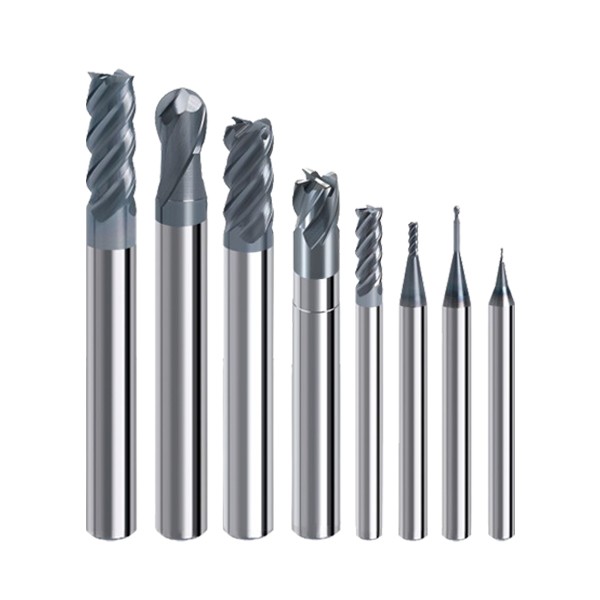
Geometry & Design: (The Fundamental Differences)
Square End Mill (Flat End Mill)
Design: Features a flat, 90-degree cutting edge with sharp, defined corners.
Purpose: Engineered for applications requiring precise, square-edged results.
Key Traits of Square End Mill :
Delivers sharp, clean corners in milled features.
Ideal for operations where edge definition is non-negotiable (e.g., keyways, gear teeth, molds).
Design: Replaces the sharp corner with a rounded profile (e.g., R0.5mm, R1 mm radius).
Purpose: Balances tool strength and cutting performance by reducing stress concentration at the corners.
Key Traits of Corner Radius End Mill:
Enhances durability in high-stress machining (e.g., hardened steels, titanium).
Minimizes chipping and breakage, extending tool life.
Different Performance of corner radius and square end mill:
Square End Mill
Pros:
Unmatched Edge Precision: Perfect for creating right-angle features in molds, dies, and electronics components.
Faster Material Removal: Square End Mill can excel in roughing operations where sharp corners aren’t a risk.
Cons:
Prone to Chipping: The sharp corners are vulnerable to breakage under heavy loads or in hard materials.
Shorter Tool Life: Higher risk of overheating and wear at the corners.
Corner Radius End Mill
Pros:
Superior Durability: The rounded edge distributes cutting forces more evenly, reducing stress and tool failure.
Smoother Finishes: Reduces chatter and vibration, improving surface quality.
Versatility in Hard Materials: Ideal for aerospace, medical, and automotive parts made from tough alloys.
Cons:
Slightly Rounded Corners: May not meet strict 90-degree requirements (though radii as small as R0.1mm are available).
Higher Initial Cost: Premium Corner Radius End Mills can be pricier, though they often pay off in longevity.
When to Use corner radius and square end mill
Choose a Square End Mill When:
Precision is Critical: For applications like PCB milling, mold inserts, or gear manufacturing where sharp, defined edges are mandatory.
Working with Soft Materials: Aluminum, brass, or plastics are less likely to cause corner chipping.
Light Cuts: Shallow passes or low-force operations reduce the risk of tool failure.
Choose a Corner Radius End Mill When:
Machining Tough Alloys: Inconel, titanium, or hardened steels demand tools that resist wear and heat.
High-Volume Production: Longer tool life means fewer replacements and less downtime.
Vibration-Sensitive Operations: The rounded edge minimizes chatter, improving stability in deep pockets or thin-walled parts.
Pro Tips for Optimizing Your Choice
For Square End Mills
Use Coatings: Apply TiAlN or ZrN coatings to improve heat and wear resistance.
Adjust Cutting Parameters: Reduce feed rates and depths of cut in hard materials to minimize stress.
For Corner Radius End Mills
Match Radius to Tolerance: Select a radius that fits your design’s corner requirements (e.g., R0.25mm for tight fits).
Consider Variable Pitch: Tools with uneven flute spacing reduce harmonic vibration, further improving finishes.
There’s no universal winner—square end mills and corner radius end mills excel in specific scenarios.
Square end mills are indispensable for precision work where sharp edges are non-negotiable.
Corner radius end mills dominate in high-performance, high-volume, or vibration-sensitive applications.